
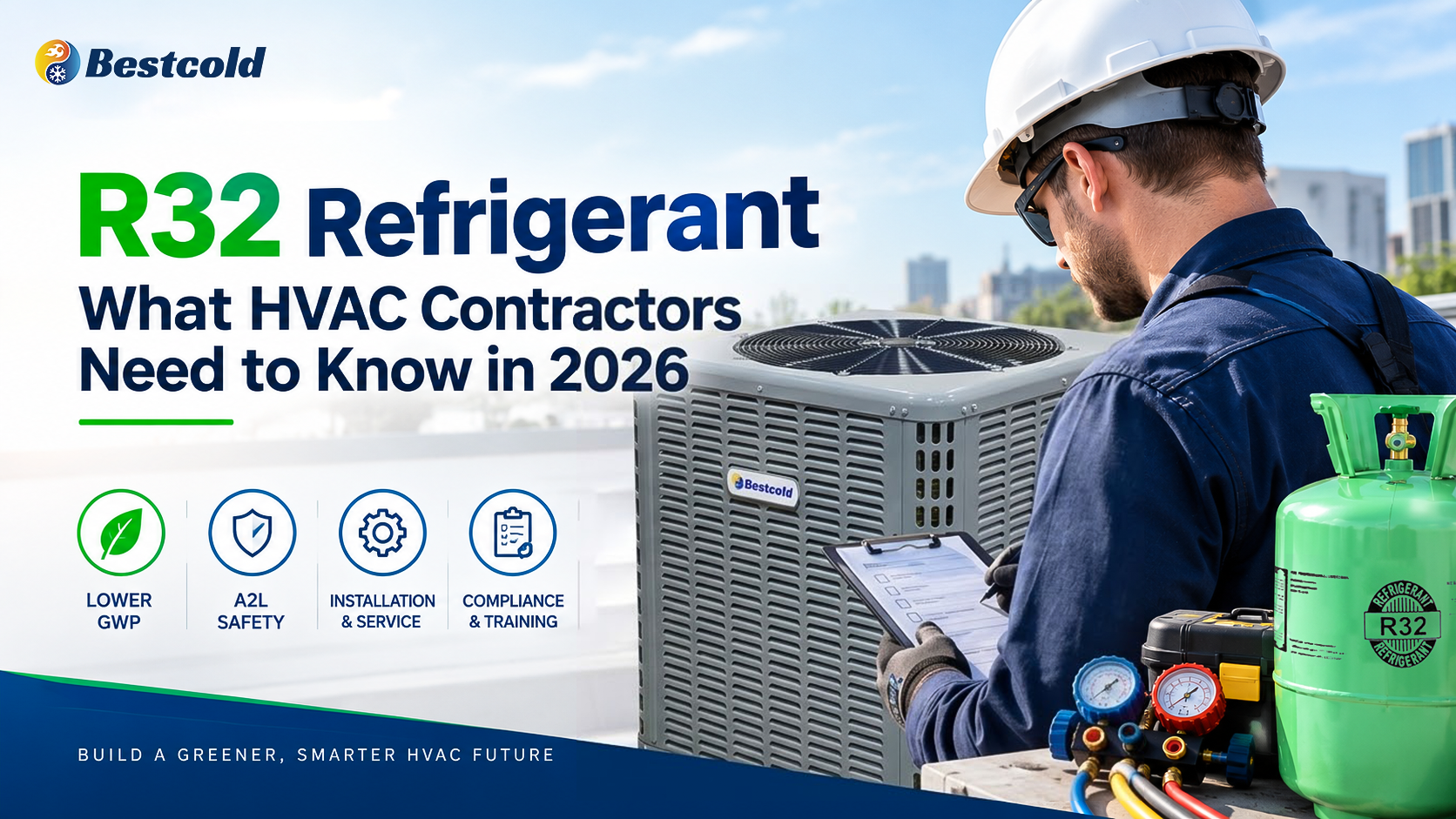
In 2026, contractors are increasingly dealing with new equipment designed around lower-GWP refrigerants, A2L safety requirements, updated installation practices, and manufacturer-specific service procedures.
R32 has a GWP of 675 and an A2L safety classification. It is listed by the EPA as acceptable for residential and light commercial air conditioning and heat pump applications, subject to applicable use conditions. The real question is: What changes when you install, commission, service, and stock equipment using R32?
The U.S. HVAC market has moved beyond the traditional R-410A era.Under the EPA's Technology Transitions rules, new residential and light-commercial air-conditioning and heat-pump systems generally face a GWP limit of 700, with the installation compliance date beginning January 1, 2025.That puts R32 below the applicable 700-GWP threshold, making it a viable refrigerant for new equipment.
When quoting a replacement system, contractors should verify:
🧊 Refrigerant type
⚠️ A2L classification
📜 Equipment certification and listing
⚙️ Factory charge
📏 Maximum allowable refrigerant charge
📋 Installation requirements
📖 Applicable local codes
🛠️ Manufacturer service procedures
Do not treat R32 equipment as a drop-in replacement for existing R-410A equipment.
R32 has lower flammability than traditional highly flammable refrigerants, but it still requires appropriate handling and installation procedures. EPA identifies R32 as an A2L refrigerant, meaning contractors need to account for its mildly flammable characteristics when working on applicable systems.
The exact requirements can vary by equipment type, installation location, applicable codes, and manufacturer instructions. Contractors should always follow the equipment installation manual and applicable AHJ requirements rather than relying on procedures developed for R-410A systems.
Contractors should be prepared to work with:
✅ A2L-compatible recovery equipment
✅ Appropriate leak-detection equipment
✅ Proper ventilation procedures
✅ gnition-source control
✅ Manufacturer-specified charging procedures
✅ Equipment and tools designed or approved for the refrigerant application
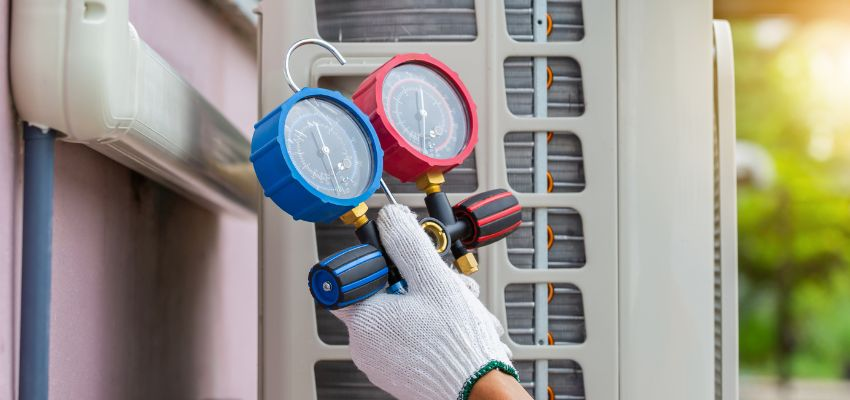
One of the most common mistakes during the refrigerant transition is thinking about refrigerant independently from the equipment.
A modern R32 system is engineered as a complete system.The compressor, heat exchanger, metering device, controls, pressure ratings, electrical components, refrigerant charge, and safety design must all be compatible with the specified refrigerant.
That means contractors should never simply charge an existing R-410A system with R32.EPA also notes that refrigerant changes generally require equipment redesign and that substitute refrigerants should not be treated as simple conversions without the necessary component changes.
For replacement projects, the better approach is straightforward:Select the complete system first, then service it according to the manufacturer's R32 specifications.
Both refrigerants can support the industry's move toward lower-GWP equipment, but their system designs, operating characteristics, components, charging procedures, and manufacturer requirements are not interchangeable. R32 is not the only low-GWP option entering the North American HVAC market.R454B is another important A2L refrigerant used in new residential and light-commercial equipment. EPA currently lists R454B at a GWP of 470 and also classifies it as A2L.
For contractors, the comparison should therefore focus less on which refrigerant is universally "best" and more on:
Which refrigerant does the equipment manufacturer specify, and what installation/service requirements come with that equipment?
The refrigerant transition creates an opportunity for contractors who invest in training early.EPA continues to require appropriate Section 608 certification for technicians working with regulated stationary refrigeration and air-conditioning equipment. EPA also provides specific resources addressing alternative refrigerants and flammable refrigerant safety.Contractors should make sure technicians understand:
For HVAC companies, this is also a business issue. Technicians who can confidently install and service next-generation systems can help the company take on more replacement and new-construction opportunities.
The refrigerant transition also changes how contractors manage inventory.Instead of stocking only legacy refrigerants and tools, contractors increasingly need to plan around multiple refrigerant platforms and equipment generations.
Before taking on a new product line.For distributors and HVAC contractors, this means checking:
Equipment → Refrigerant → Tools → Parts → Training → Documentation
Before adding an R32 product to your installation portfolio, ask the manufacturer or supplier:
🔍Is the complete system designed and certified for R32?R32 is not simply another refrigerant replacing R-410A. It is part of a broader shift toward lower-GWP HVAC equipment in North America.
For contractors, the winning strategy is to prepare for the complete transition: Know the refrigerant. Know the equipment. Know the A2L requirements. Use the right tools. Follow the manufacturer's procedures. Train your technicians.Contractors who adapt early will be better positioned for residential replacement, new construction, light commercial projects, and future low-GWP equipment demand.
Whether you are sourcing equipment for a residential replacement program, new construction project, or commercial HVAC application, Bestcold HVAC can support, product selection, project supply, and technical coordination.


