
 Introduction
In modern commercial construction and building management, three key factors drive HVAC system choices: reliable efficiency, maximizing usable space, and simple installation and upkeep. Among all commercial heating, ventilation, and air conditioning options, the Rooftop Package Unit (RTU) is the industry go-to for medium to large commercial and industrial buildings.

What is a Rooftop Package Unit (RTU)?
A Rooftop Package Unit (RTU) — also called a packaged rooftop HVAC system — is a fully built, single-box heating, cooling, and ventilation system made specifically for commercial, industrial, and public buildings. As the name says, it’s permanently installed on the building’s roof (or sometimes on raised platforms), which sets it apart from standard split-system HVAC setups.
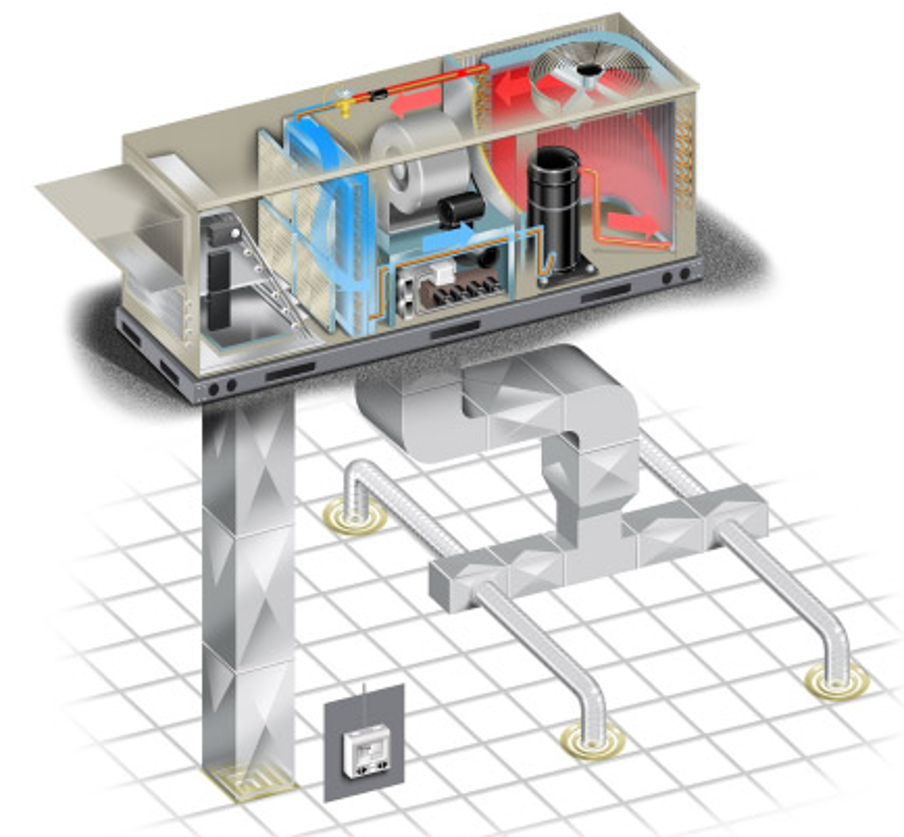
The biggest feature of an RTU is its all-in-one design: unlike split HVAC systems (which have separate indoor air handlers and outdoor cooling units), RTUs put every essential part — compressor, heat exchange coils, air blower, heating element, air filters, and control panel — inside one weatherproof box. This compact, centralized setup saves indoor space, simplifies duct connections, and makes the whole HVAC system easier to set up for commercial buildings.
How Does a Rooftop Package Unit (RTU) Work?
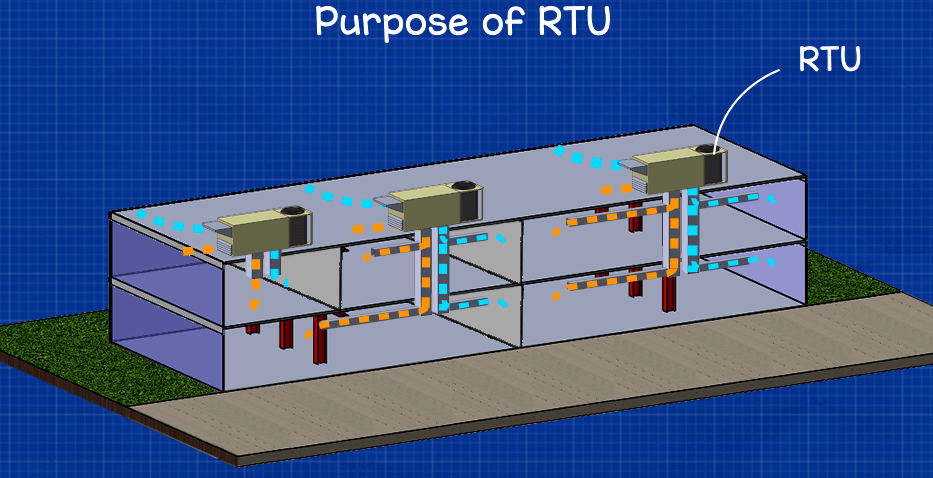
Rooftop Package Units run on a closed HVAC cycle: they condition a mix of recirculated indoor air and fresh outdoor air, then send this temperature-controlled, filtered air through ducts to all areas of the building. The full process happens in 4 automatic, sequential steps, and it switches smoothly between heating and cooling based on thermostat settings and outside weather:
The RTU pulls in two air streams through dedicated vents: return air (air from inside the building that’s being recirculated) and fresh outdoor air (to keep indoor air clean and meet ventilation standards). A built-in mixing box balances these two streams to save energy — avoiding over-cooling or over-heating outside air while following commercial building air quality rules.
This is the core step where the air is heated or cooled to your set temperature:
Before being sent into the building, conditioned air passes through multi-stage filters (rated MERV 8 to MERV 13 for commercial use) to trap dust, pollen, and other airborne particles. This keeps indoor air clean and protects the RTU’s internal parts from dirt buildup.
A high-power blower fan pushes the filtered, temperature-adjusted air through supply ducts to different zones of the building. At the same time, the unit controls how much exhaust air leaves and fresh air enters using adjustable dampers, keeping air pressure steady, indoor air clean, and temperatures consistent everywhere.
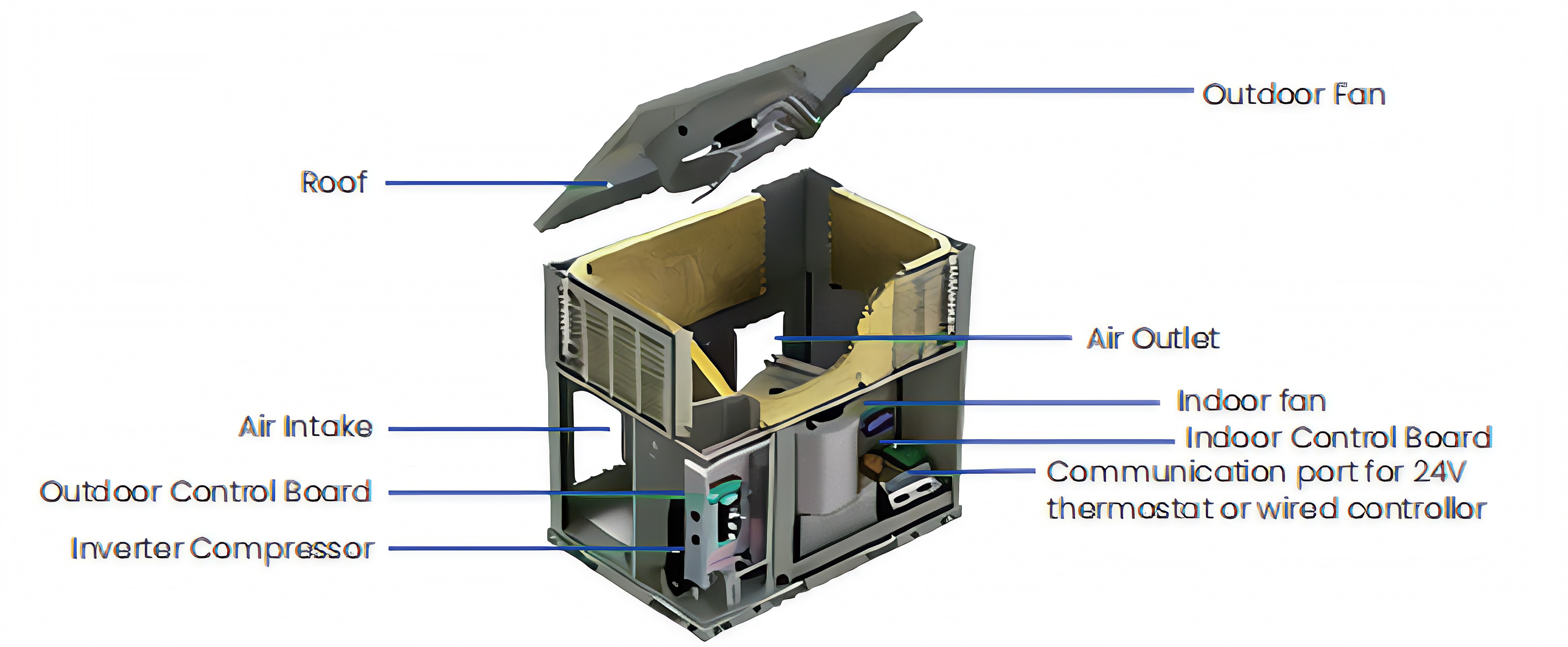
Key Components of a Commercial Rooftop Package Unit
Every RTU is a carefully built system of connected parts, each with a specific job in heating, cooling, and ventilating. Below is a simple, detailed breakdown of the key parts and what they do:
Core Advantages of Bestcold Commercial Rooftop Package Units
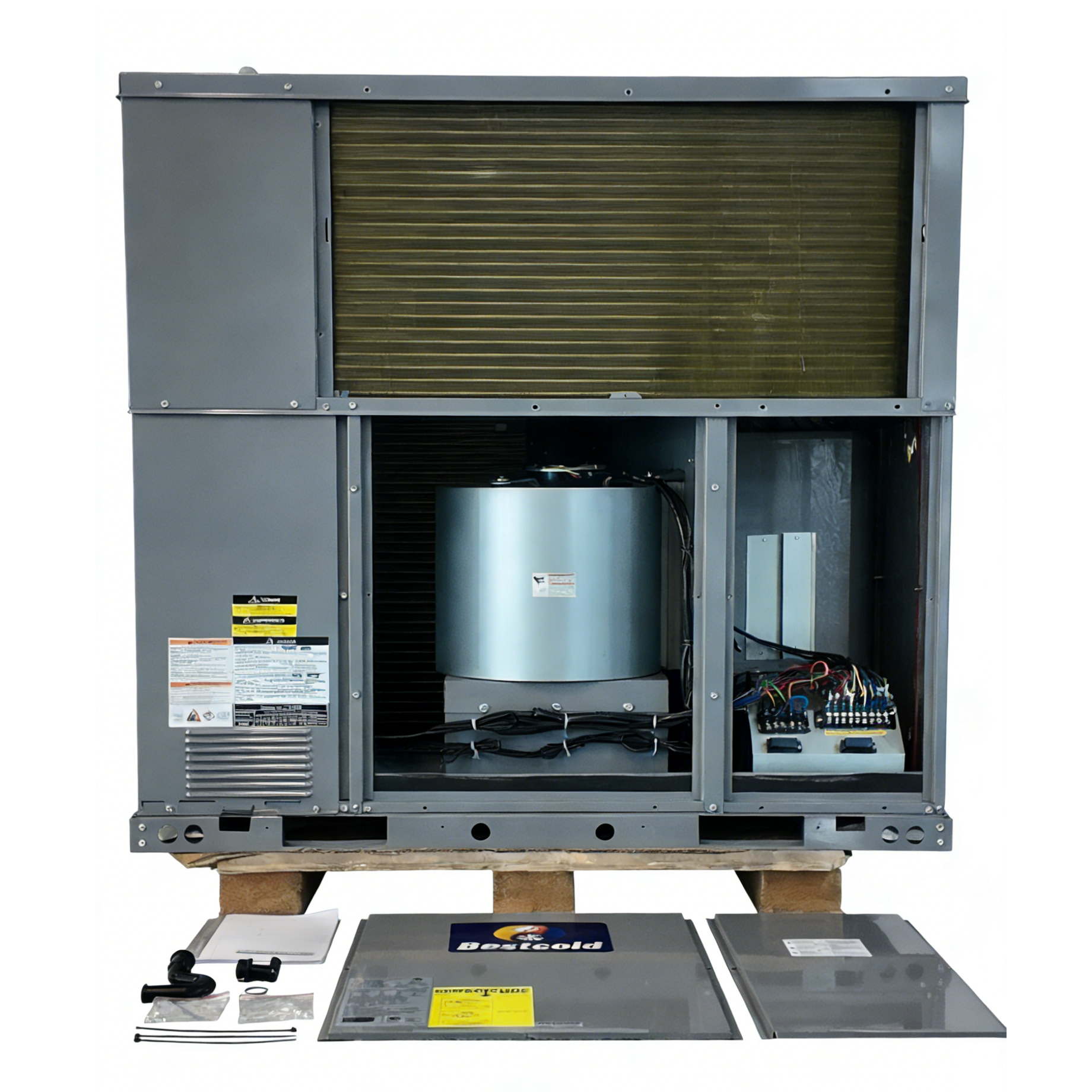
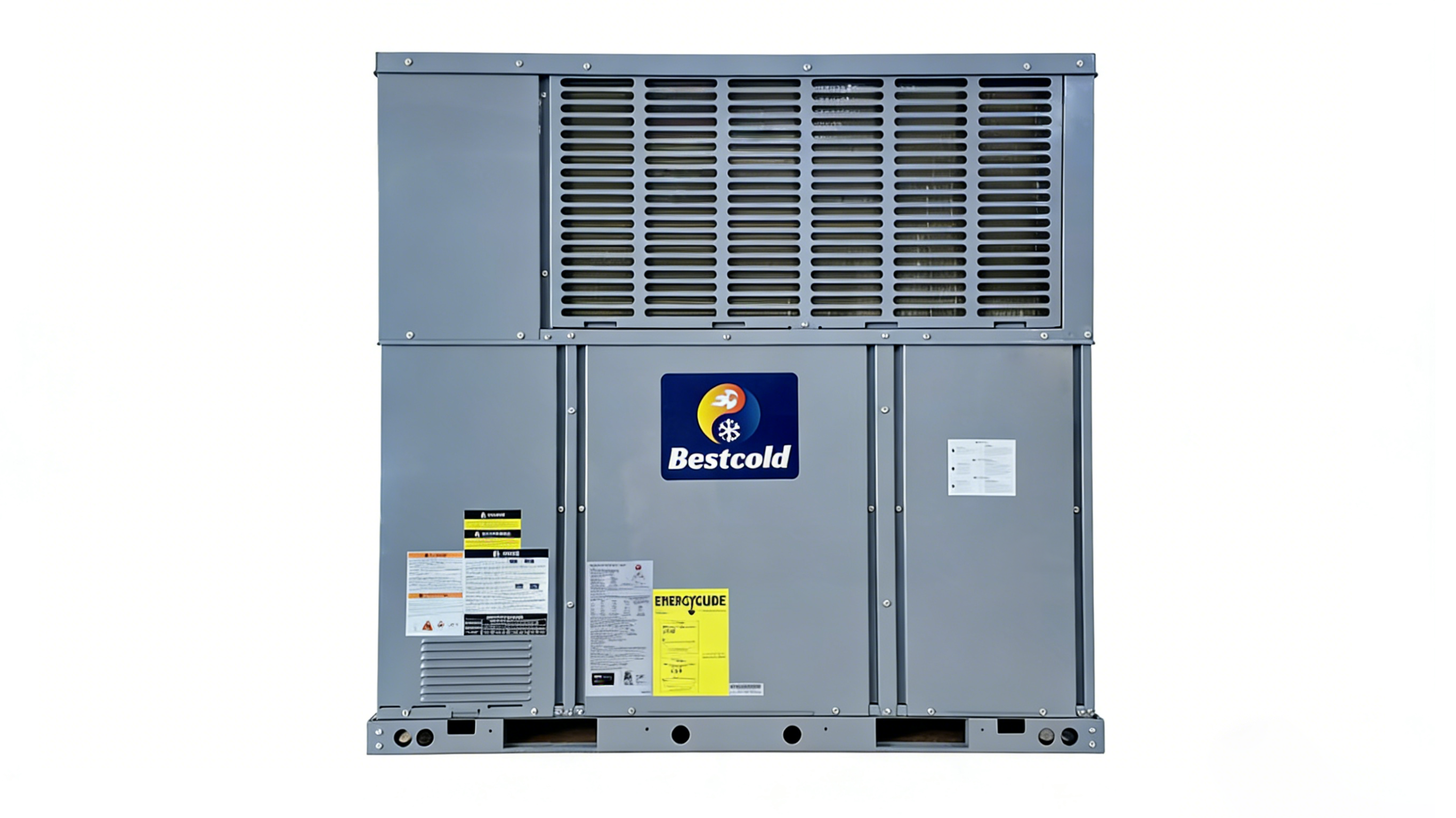
Bestcold RTUs are engineered with premium technologies and user-centric design, delivering 8 key competitive advantages that boost performance, cut costs, and simplify daily operations for commercial facilities:
Our RTUs are equipped with a high-performance heat exchanger that redefines HVAC responsiveness. It enables faster cooling and heating cycles to reach target temperatures in minutes, delivers superior heat recovery efficiency to recycle wasted thermal energy, and minimizes pressure loss throughout the system. Unlike standard heat exchangers, this component eliminates lag and inefficiency, so you’ll notice consistent, powerful temperature regulation right from startup, with no long wait times for comfortable indoor conditions.
Built-in smart inverter technology enables automatic, real-time speed adjustment for compressors and fans, matching output exactly to the building’s heating/cooling load. This eliminates the energy waste of fixed-speed units that cycle on and off repeatedly. The result is ultra-stable indoor temperatures with zero hot/cold fluctuations, and a proven minimum 30% reduction in electricity consumption compared to conventional non-inverter RTUs, drastically cutting monthly utility bills for commercial spaces.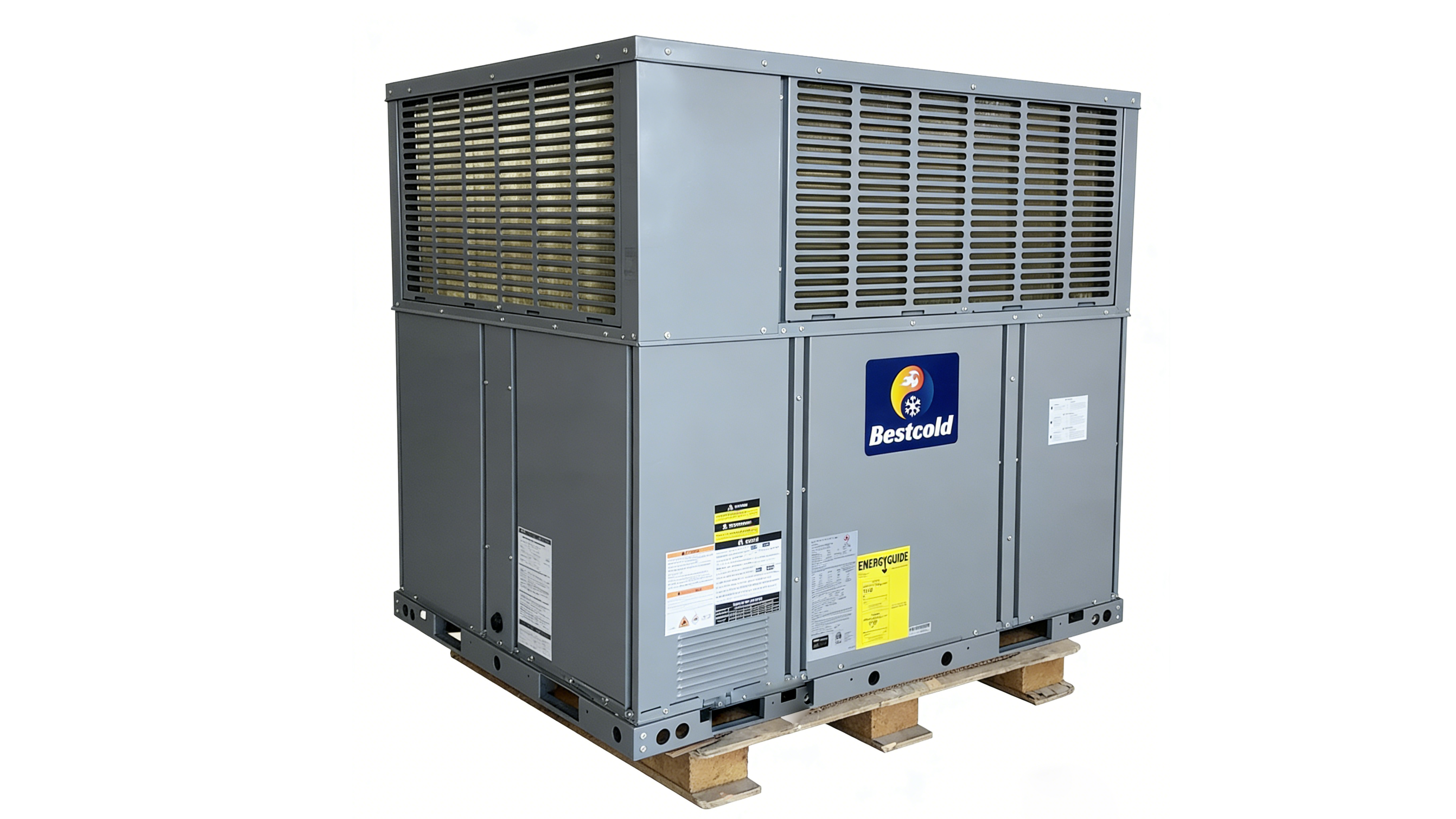
Every Bestcold RTU uses a high-quality scroll compressor, featuring a simplified, low-friction internal structure with fewer moving parts than reciprocating compressors. This durable, precision-built design reduces wear and tear, minimizes breakdown risks, and extends the unit’s service life significantly. The scroll compressor runs smoothly and quietly, ensuring consistent performance year after year, making it a long-term, cost-effective investment for commercial facilities.
We’ve integrated a comprehensive safety system to safeguard the RTU and your building, with built-in safeguards for all critical operating parameters. This includes overcurrent protection to prevent electrical damage, high and low voltage protection to withstand power fluctuations, and real-time temperature monitoring for coils and components. The system automatically shuts down in abnormal conditions to avoid hazards, ensuring 24/7 safe, secure, and uninterrupted operation.
This RTU uses direct evaporation refrigeration technology, cutting out the energy loss of secondary heat exchange processes found in traditional systems. This streamlined design boosts overall operating efficiency while keeping noise levels to a minimum. The unit operates with reduced vibration and sound damping, resulting in ultra-low indoor noise — no disruptive humming or clanging, making it ideal for noise-sensitive commercial spaces like offices, schools, hospitals, and restaurants.
As a fully rooftop-mounted system, the entire RTU assembly is installed outside on the building’s roof, with no indoor mechanical units, bulky cabinets, or equipment pads required. This frees up 100% of valuable indoor floor space that can be used for revenue-generating purposes: retail sales areas, office workstations, storage, customer seating, or additional tenant space — a major advantage for high-value urban commercial properties.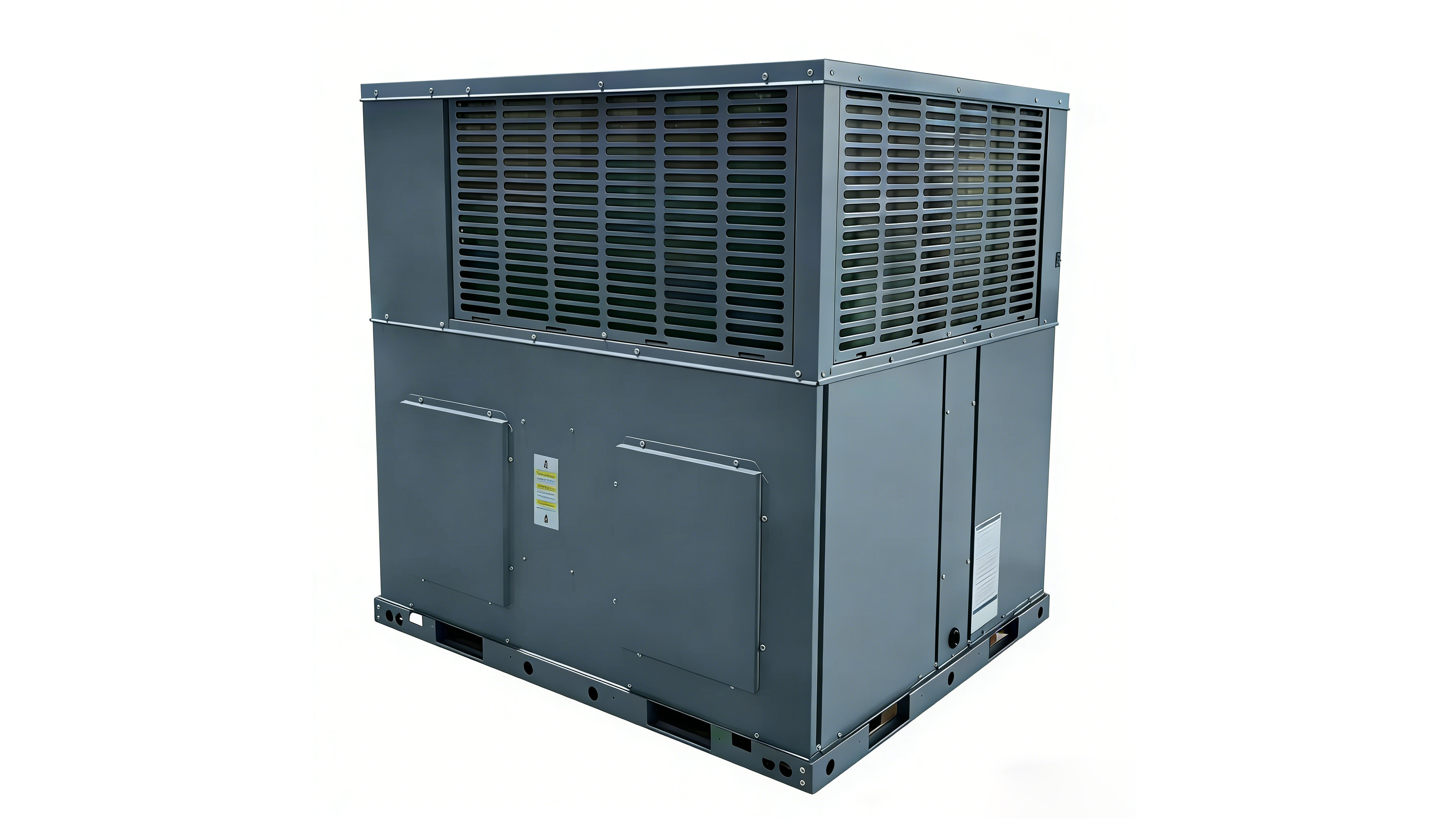
The RTU features a simplified, straightforward piping design with centralized service points, reducing the complexity of routine upkeep. All inspections, filter changes, component repairs, and preventative maintenance can be completed entirely on the rooftop, with no need to access indoor spaces or disrupt daily business operations (such as retail hours, office work, or patient care). This minimizes downtime and lowers labor costs for facility teams and HVAC technicians.
The unit’s outer cabinet and internal vulnerable components are coated with a specialized anti-corrosion finish, engineered to endure harsh outdoor environments year-round. This protective layer resists sun UV radiation, heavy rain, snow, frost, and even coastal salt air corrosion. The rugged, weatherproof construction prevents rust, degradation, and component damage, ensuring the RTU maintains peak performance and appearance even in extreme climates.
RTU vs. Split System HVAC: Key Comparative Differences
While both RTUs and split systems handle heating and cooling, they’re designed for different uses. The table below shows clear differences to help you choose the right system:
|
Feature Category |
Rooftop Package Unit (RTU) |
Split System HVAC |
|
Primary Installation Location |
Exclusively rooftop (or elevated platform) |
Indoor air handler + outdoor condensing unit (ground/wall-mounted) |
|
System Design |
All-in-one, fully packaged single cabinet |
Split components (indoor + outdoor units connected by refrigerant lines) |
|
Space Utilization |
Saves 100% of indoor mechanical space |
Requires dedicated indoor space (closet, mechanical room, attic) |
|
Maintenance Access |
Centralized rooftop access; no indoor disruption |
Distributed components; indoor service required for air handler |
|
Target Application |
Commercial, industrial, institutional (mid-to-large scale) |
Residential, small commercial, light retail (low-capacity needs) |
|
Installation Complexity |
Low to moderate; quick duct/utility connections |
Moderate to high; extensive refrigerant line routing |
|
Zoning Flexibility |
High; multiple units for independent zoning |
Limited; requires add-on zoning kits |
How to Select the Right Commercial RTU for Your Project
Choosing the right RTU requires data-driven planning, based on your building’s size, local climate, and daily operation needs. Here are the most important factors to consider: Accurate Cooling/Heating Capacity
Capacity is measured in tons (1 ton = 12,000 BTU per hour) or kilowatts (kW), calculated by a professional HVAC load assessment. Key factors include building square footage, ceiling height, insulation quality, window placement, number of people, and heat-producing equipment (computers, lights, machinery). Choosing a unit that’s too big or too small causes inefficiency, poor comfort, and early breakdowns.
Energy Efficiency RatingsPick units with high SEER (cooling efficiency), EER, and AFUE (gas heating efficiency) ratings. Look for Energy Star certification and inverter models to maximize long-term energy savings.
Climate & Environmental AdaptabilityAirflow & Ventilation RequirementsMatch the unit’s CFM (cubic feet per minute) airflow rating to your building’s duct design and occupancy rules. Proper airflow ensures even temperatures, enough fresh air, and compliance with indoor air quality standards.
Smart Control & Automation CompatibilityChoose RTUs with digital controls, Wi-Fi connectivity, and building automation system (BAS) compatibility for remote monitoring, scheduling, and zone control. This makes operation more efficient and building management easier.
Customization & ComplianceMake sure the unit meets local building codes, voltage needs (208V, 460V, 575V), refrigerant standards (eco-friendly R410A, R454B), and noise rules. For unique projects, pick manufacturers that offer custom OEM/ODM solutions.
 Critical RTU Installation Considerations
Proper installation is critical for RTU performance, safety, and lifespan. Key requirements include:
Proactive RTU Maintenance Tips for Long-Term Performance
Regular maintenance prevents breakdowns, extends the unit’s life, and keeps efficiency high. Follow this simple maintenance schedule:
Monthly Maintenance (Facility Staff)
Quarterly/Seasonal Maintenance (HVAC Technicians)
Annual Professional Inspection
Schedule a full professional HVAC checkup every year to test compressor performance, damper function, economizer operation, and overall system health. This avoids expensive emergency repairs and keeps your warranty valid.
Conclusion
Rooftop Package Units (RTUs) are the top choice for commercial HVAC systems, offering a winning mix of space savings, easy installation, simple maintenance, and scalable efficiency for nearly all commercial, industrial, and public buildings. From retail malls and office complexes to hospitals, schools, and warehouses, RTUs deliver steady temperature comfort, clean indoor air, and long-term cost savings.
For reliable, customized, and energy-efficient Rooftop Package Units built to last, Bestcold is your global HVAC partner. Contact our team today to discuss your project needs and find the perfect RTU solution for your commercial space.

