
For commercial HVAC buyers, a rooftop unit is more than a piece of equipment. It directly affects a building’s energy consumption, operating costs, maintenance planning, and long-term HVAC performance.
That is why ENERGY STAR certification deserves more attention when comparing commercial rooftop HVAC units.
For distributors, contractors, and project buyers, choosing ENERGY STAR certified equipment can provide a clearer benchmark when evaluating energy-efficient rooftop systems for commercial applications.
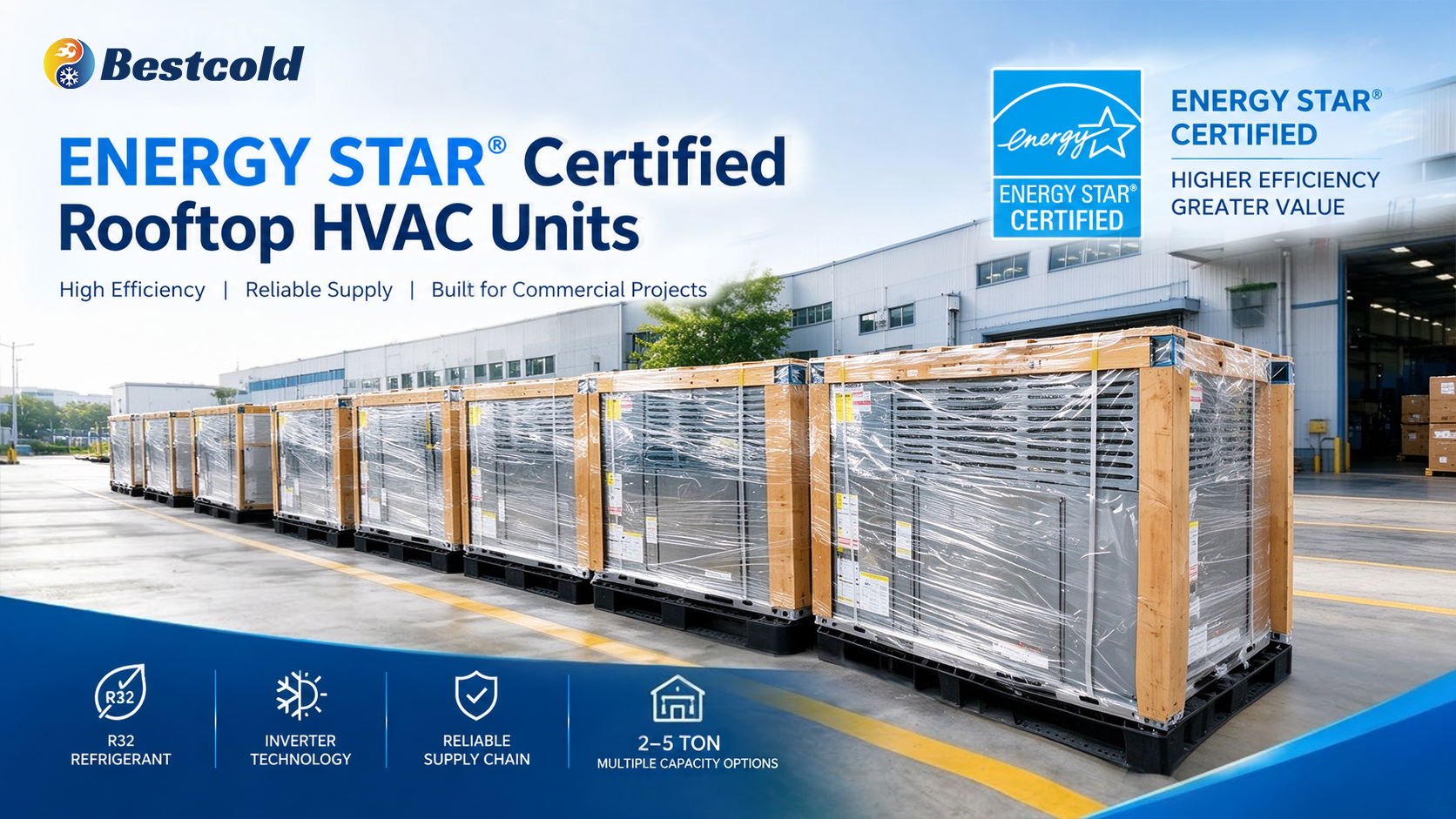
Looking for official certification details? Verify them directly through ENERGY STAR.
Bestcold believes in transparent product information. You can visit the official ENERGY STAR product database to search for Bestcold and explore the available certification records for eligible models. Review listed model numbers and available performance data to help verify product specifications and support your HVAC sourcing decisions.
How to check:
Visit the official ENERGY STAR Product Finder.
Review the matching product records, model numbers, and available efficiency data.
Ready to verify? Use the official database below to explore the available information.:
https://data.energystar.gov/Active-Specifications/ENERGY-STAR-Certified-Heat-Pumps/83eb-xbyy/data_preview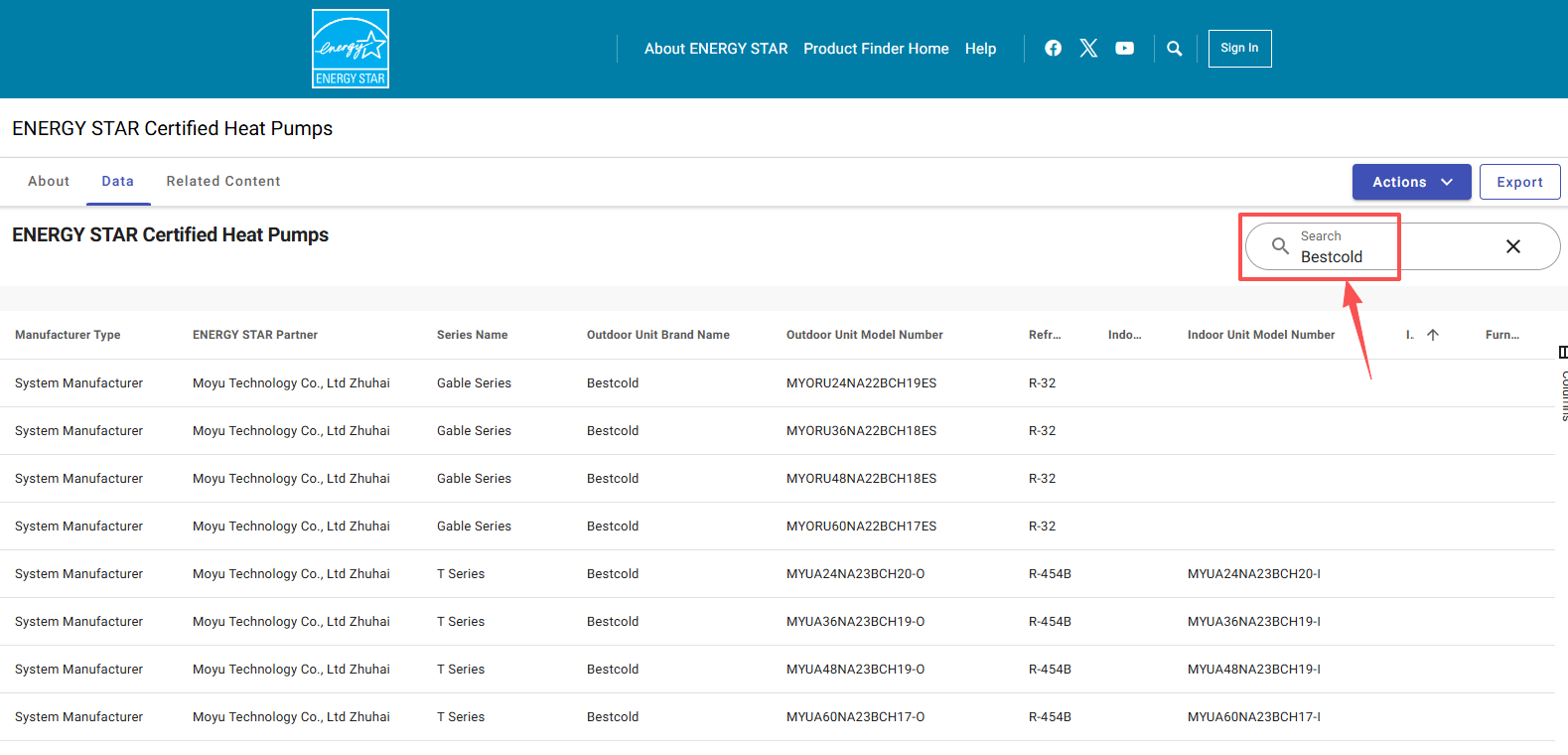
Commercial HVAC equipment can vary significantly in efficiency, even when models have similar cooling capacities.
ENERGY STAR certification provides an independent efficiency benchmark that can help HVAC professionals narrow down equipment options when energy performance is an important project requirement.
For commercial buildings operating HVAC systems for long hours, even relatively small differences in efficiency can become meaningful over the equipment’s service life.
For contractors and distributors, this also creates a straightforward way to position high-efficiency equipment when customers are comparing multiple rooftop HVAC solutions.
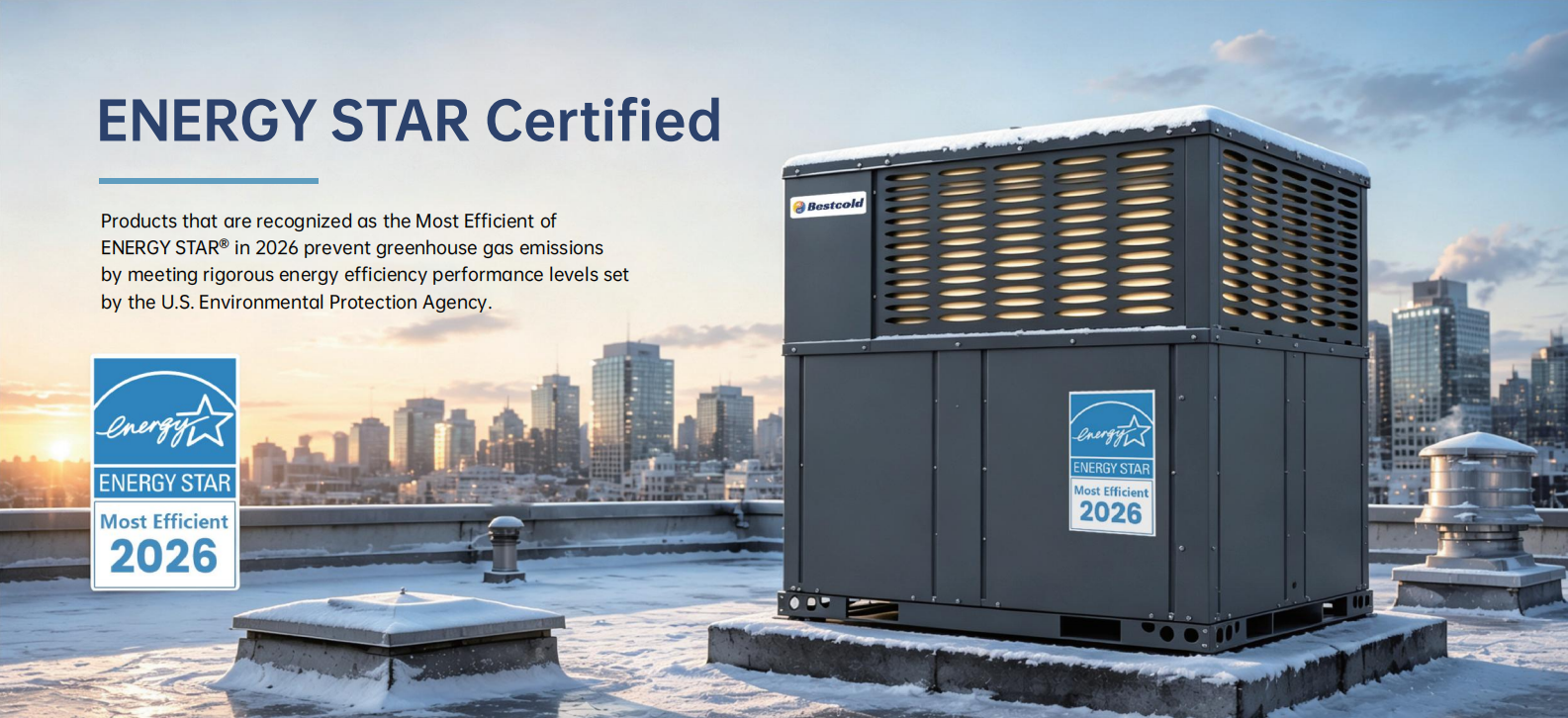
Rooftop units are commonly used in applications such as:
These buildings may experience long operating hours and changing heating and cooling loads throughout the day.
An efficient rooftop system can help building owners better manage energy consumption while maintaining the required indoor comfort.
For HVAC contractors, this makes efficiency an important factor alongside capacity, electrical requirements, refrigerant, installation requirements, and overall equipment reliability.
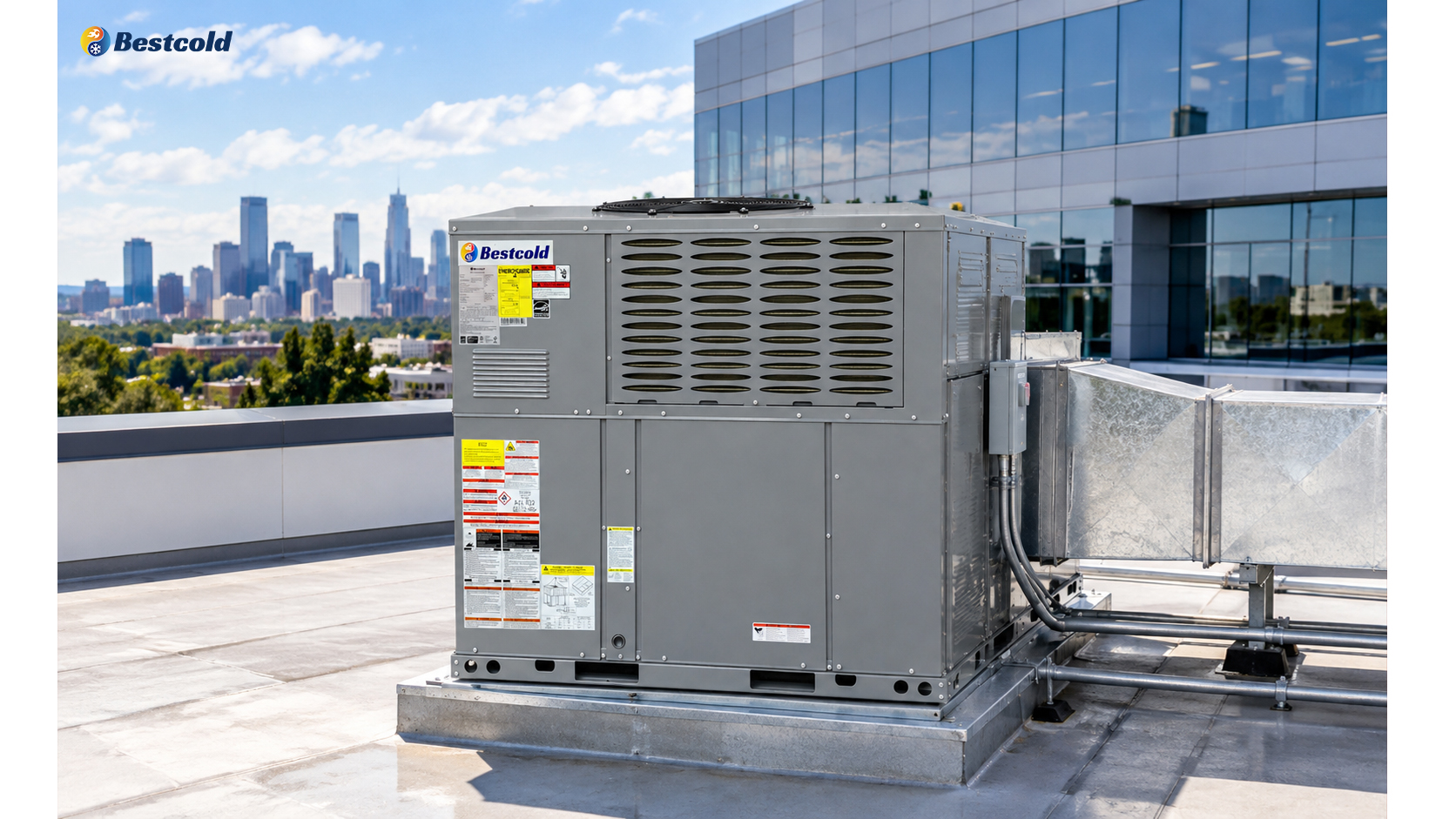
When sourcing commercial rooftop HVAC units, buyers should look beyond tonnage and upfront equipment cost. A practical evaluation can include:
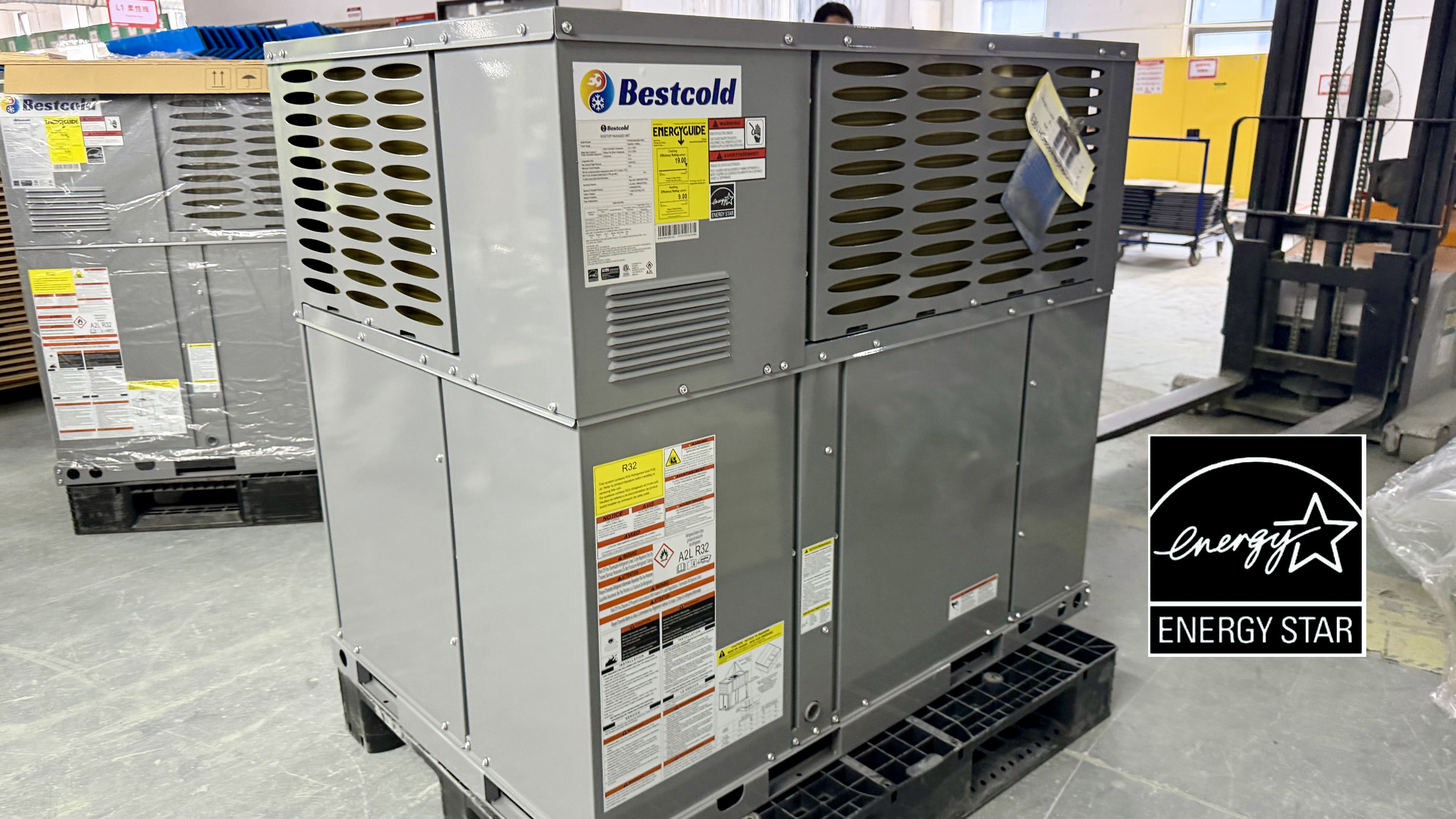
Bestcold offers a range of inverter heat pump rooftop units designed for North American commercial applications, with ENERGY STAR certified models available from 2 to 5 tons.
The current lineup includes:
|
Capacity |
SEER2 |
Refrigerant |
Electrical |
⭐ENERGY STAR |
|
2 Ton |
19 |
R32 |
220V / 1Ph / 60Hz |
✓ |
|
3 Ton |
18 |
R32 |
220V / 1Ph / 60Hz |
✓ |
|
4 Ton |
17 |
R32 |
220V / 1Ph / 60Hz |
✓ |
|
5 Ton |
17 |
R32 |
220V / 1Ph / 60Hz |
✓ |
The range gives distributors and contractors multiple capacity options while maintaining a common focus on high-efficiency inverter technology and ENERGY STAR certification.
For projects where energy performance is part of the equipment selection criteria, having several certified capacity options can make sourcing and product matching more flexible.
For commercial HVAC professionals, ENERGY STAR should not be the only factor in equipment selection. Capacity, application, installation requirements, electrical configuration, refrigerant, availability, technical support, and supplier reliability all need to be considered together.
But it is a valuable starting point.
When evaluating commercial rooftop HVAC units, ENERGY STAR certification provides a recognizable efficiency benchmark and helps buyers identify equipment designed with energy performance in mind.
For distributors, contractors, and project buyers looking for ENERGY STAR certified rooftop HVAC solutions, Bestcold offers 2–5 ton R32 inverter heat pump rooftop units for North American commercial applications.

